
Children often read more than adults; most of us remember our favorite children’s books. Reading for pleasure has an enormous impact on children and their development. Children who enjoy reading develop linguistic skills more effectively than those who don’t. They are also more empathetic and emotionally aware.
Reading nurtures a child’s imagination and cognitive growth. Children’s literature has grown exponentially since its emergence in the 19th Century. Every child can find relatable characters in children’s literature today. Experiencing varied literature can cultivate a love for reading that never fades.
In this guide, we explore the role of children’s literature and recommend essential resources for parents and educators.
Review the history of children’s literature and discover how to incorporate it into children’s lives.
Children’s
Literature Overview
Children’s literature encompasses various forms like nursery rhymes, poems, plays, novels, and illustrated books, catering specifically to young audiences. The inclusion of striking illustrations in many children’s books aids in engaging young readers who are just beginning to learn to read.
A recurring theme in children’s literature is the use of fairytales and fables, often incorporating magical and mythical elements to spark children’s imaginations and foster creativity. Moreover, these stories often convey essential life lessons centered around family, friendship, sharing, kindness, and other moral values.
Emergence of Children’s Literature
(18th-19th Centuries)
The first known children’s literature, Orbis Sensualium Pictus, appeared in 1658, aiding children’s learning with pictures and letters. However, due to widespread illiteracy, children’s literature as a genre hadn’t fully emerged.
By the 18th Century, literacy increased significantly, shaping the development of children’s literature with simplified themes related to religion and society. In 1800, 60% of men and 40% of women were literate. This became 97% for men and women within a century.
In 1800
60%
Men
40%
Women
were literate
This became 97% for men and women within a century.
Early British children’s literature, like the works of James Janeway and Isaac Watts, centered heavily on Christian teachings and morality, offering God as the remedy for wrongdoing.
Janeway’s A Token for Children: An Exact Account of the Conversion, Holy and Exemplary Lives and Joyful Deaths of Several Young Children earned continuous sales for over a Century.
Throughout the 18th Century, educators and parents recognized the impact of literature on children’s development. As education improved and the demand for children’s literature grew, printing and mass production made creating children’s books more accessible.
Development of Children’s Literature (20th Century)
During the Victorian period, children’s literature gained a strong foothold in the publishing industry, featuring imaginative stories by influential authors like Lewis Carroll and Mark Twain. Symbolism and fantasy became prominent themes.
This trend continued in the 20th Century with writers like CS Lewis and JRR Tolkien creating expansive fictional worlds and introducing more diverse storytelling and some female protagonists. The era presented relatable characters and experiences while adopting a less instructional tone. Identifying with characters and their emotional experiences aids children’s cognitive development.
Renowned authors like Roald Dahl further encouraged children’s imagination. Post-war American children’s literature became even more creative, seen in works by Dr. Seuss and Maurice Sendak. Over the past two centuries, children’s literature evolved, incorporating games to aid development and comprehension.
Children’s
Literature Games
Using games effectively engages children in reading. Technology has evolved children’s educational games, but traditional-style games are still popular. This section explores different children’s literature games parents, and educators can use.
Board and Card Games
Tactile and sensory approaches benefit children’s linguistic development more than traditional instruction. Physical games about language engage children in a sensory, memorable way. Let’s explore games that enhance a child’s linguistic experience.

Build-a-Story Cards
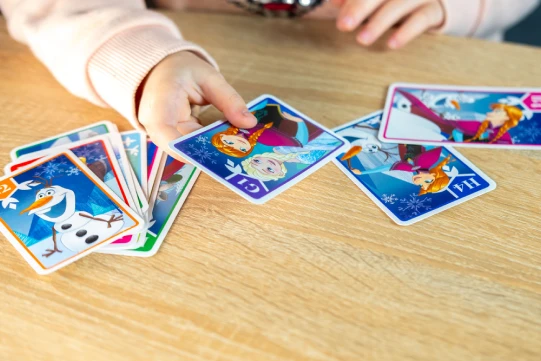
Barefoot Books offers Build-a-Story card games that ignite children’s creativity. With 36 cards per pack and no text, kids can create stories about magical castles, space quests, and ocean adventures. These games encourage collaborative storytelling and expand creative horizons.
Book-Based Board Games
Board games based on favorite books, like BrainBox’s Roald Dahl game, engage children in literary fun. Players collect cards of characters from Dahl’s renowned works, advancing through the board to win. These games foster children’s excitement for reading.
Digital and Interactive Literature Games
Engaging children in reading is vital today – it’s easier with interactive storytelling games. Catering to young readers and teens encourages creativity and empathy while broadening comprehension and vocabulary.
Interactive Literature Games
Initiate interactive storytelling by having one person read one character’s dialogue, fostering creativity and empathy. Another word game involves asking kids yes/no questions to identify words, improving their understanding of definitions.
Digital Literature Games
Apps and websites combine gaming and reading, increasing vocabulary and entertainment.
Sites like Reading Eggs provide hundreds of free online reading games.
Apps like WW Alice in Wonderland also promote active engagement in reading. Players connect letters, making the classic Victorian novel’s next word.
Online Resources for Literature Games
For more inspiration and access to free and paid digital literature games for children, explore this list of websites focused on improving comprehension and vocabulary in a fun way.
Prodigy Game
Prodigy provides resources for parents and teachers to increase enjoyment and engagement with English. Prodigy lets children build worlds by gathering materials, answering curriculum-aligned questions, and developing their English through play.
Teach Your Monster
This website brings magic to reading games, making language fun and immersive for new readers. Their Bafta-nominated games teach children sound and letter recognition through bright, colorful graphics and humorous narratives. Embrace adventurous reading with this website.
Lingokids
The Lingokids Playlearning™ app has over 1,200 activities for children. Designed for 2-8-year-old children, Lingokids focuses on pronunciation and grammar. Lingokids provides extra-curricular activities that increase children’s interest in English.
Best Children’s Book
to Film Adaptations
Film adaptations are an effective way to engage children in reading and storytelling. If children enjoy the film, they can read the book. Alternatively, children can improve their textual analysis skills by reading the book first. Let’s review some popular children’s book adaptations.
The Harry Potter Series
Original Publication:
Seven books of the Harry
Potter Series,
J. K. Rowling (1997 – 2007)
Plot and Themes:
The Harry Potter books and films follow the coming-of-age journey of Harry, a young wizard raised by non-magical relatives after the tragic loss of his parents.
Alongside his best friends, Ron and Hermione, Harry learns to navigate the magical world while exploring themes of trust, family, and the battle between good and evil.
Impact on Children’s Literature:
The Harry Potter series enthralls children with its magical world of wizardry. Blending the magical realm with reality, the books immerse readers in the Hogwarts school experience. The film adaptations’ enduring popularity has made it a top-grossing franchise. Furthermore, the books’ accessible and straightforward writing style makes them enjoyable for beginner readers.
Matilda
Original Publication:
Matilda, Roald Dahl (1988)
Plot and Themes:
Matilda is about a highly intelligent girl with telekinetic powers, neglected by her scamming used car salesman father and ignorant mother. She finds solace in books and dreams of a better life. When she finally attends school, she learns the importance of friendship and standing up to bullies, including the strict school principal, Miss Trunchbull, and her own parents.
Impact on Children’s Literature:
Matilda’s love for stories sparks a passion for reading and learning in children. She becomes a robust role model, defending herself and her friends and encouraging young girls to embrace their intellect and abilities. Themes of rage are also explored as Matilda learns to control her feelings and abilities, triumphing over Miss Trunchbull’s brute-force nature.
Babe
Original Publication:
The Sheep-Pig
Dick King-Smith (1983)
Babe, the Gallant Pig
Dick King-Smith (1985) (Retitled)
Film Adaptations:
Babe
August 4, 1995
(Chris Noonan)
Plot and Themes:
Babe, an orphaned piglet, is raised by sheepdogs. He discovers his talent for herding sheep and learns about kindness and family. The film explores themes of trying something new as Babe defies the odds. He herds sheep without aggression, challenging norms set by sheepdogs. A sequel, Babe: Pig in the City, released in 1998, was not adapted from King-Smith’s original work.
Impact on Children’s Literature:
Babe inspires compassion for various animals, altering perceptions of animal welfare by giving farm animals relatable personalities. Children witness some realities of farm life, including danger and death. The story encourages children to explore new things and prioritize kindness over bossiness or cruelty.
Multicultural
Books for Children
In the last decade or so, multicultural books for children have been more accessible and numerous. Raising children with stories from different cultural and societal backgrounds can improve their empathy and compassion, leading to more well-rounded adults who work well with others.
Parents and educators looking to bring multicultural influences to children’s spaces can benefit from books like these.
I Love Me!,
Diane Ewen (2022)
This book is filled with positive affirmations to teach young children to embrace their uniqueness and feel good about themselves. Joyful statements and vibrant artwork invite children to participate in self-love as part of a healthy daily routine. There is even advice for parents and guardians about encouraging self-assuredness in children.
Fruits,
Valerie Bloom (2019)
Fruits is a counting poem book documenting one little girl’s journey to eat lots of fruit in a single day. This book lets young children practice counting and learn about various Caribbean fruits, including mangoes, bananas, and more. The illustrations in this book, created by David Axtell, complete the warmth and appeal for child readers.
Coming to England,
Floella Benjamin (2021)
This picture book revolves around hope and change as Baroness Floella Benjamin moves from Trinidad to London as a ten-year-old. Traveling by boat for two weeks, Floella quickly learns that London is not what she expected. The message of courage in the face of adversity will resonate with many young children, especially those from immigrant families.

This is Our World,
Tracey Turner (2022)
In this colorful story, child guides tell the reader about plants, animals, and the natural world. This book celebrates diversity in our world, both in nature and across cultures. Children can enjoy a global tour of humanity and learn how people live in various climates and cultures. Child readers will enjoy the beautiful illustrations and glimpses into starkly different lives.
The Lotterys Plus One,
Emma Donoghue (2017)
In Emma Donoghue’s debut children’s story, The Lotterys Plus One, a large, ethnically diverse family with two sets of same-sex parents, seven children, and unique pets showcases love and acceptance. However, when the estranged grandfather arrives as the ‘plus one,’ he challenges the family’s unity, leading to compromises and growth.
Children’s Plays
Engaging children with literature is best achieved through performance, making plays an effective way to spark their interest in storytelling.
School plays allow students to perform, learn stage script conventions, and explore physical storytelling. Older children can create scenes and plays on important topics like bullying or littering, enhancing communication skills and conveying meaningful messages.
Watching live theater performances also improves children’s comprehension of acting and storytelling. Many stage plays directly adapt children’s literature, igniting their imagination and passion for stories.
Let’s review some popular children’s stage play adaptations.
James and the
Giant Peach
This stage adaptation of Roald Dahl’s renowned novel brings the story to life, captivating audiences with vibrant and colorful staging. The striking costuming and larger-than-life storytelling spark creativity and imagination, creating a whimsical and exciting experience for all.
Alice in
Wonderland
Countless colorful and magical stage adaptations of Alice in Wonderland exist, making it a perfect play to engage kids with literature and adaptations. From the original novel to Disney’s animation and live performances, children can immerse themselves in this strange world and explore storytelling mechanics.
Wicked
Wicked, a long-standing theatrical success, is a complex adaptation based on Gregory Maguire’s 1995 novel, which draws inspiration from L. Frank Baum’s The Wonderful Wizard of Oz and its iconic 1939 film adaptation. This musical offers older children and teens a unique opportunity to explore storytelling from different character perspectives.
Annie
Annie, a musical adaptation of the 1924 comic Little Orphan Annie, has become widely known. Set in the 1930s Great Depression, this historical yet relatable story explores identity struggles, making it appealing to children of all ages. Annie serves as an exercise in comprehending literature and its adaptation.
The Gruffalo
The original book, The Gruffalo, was written by Julia Donaldson in 1999. Since then, it has become synonymous with children’s literature and storytelling. The stage show has been in London’s West End, Sydney’s Opera House, and Broadway, so there are plenty of opportunities to see the magical story – and creature – brought to life on the stage.
The Tiger Who
Came to Tea
Young children can enjoy seeing a classic piece of literature come to life on stage in this adaptation. Written by Judith Kerr and adapted for the stage by David Wood, this adaptation incorporates songs into the mischief and mayhem from the original story. Seeing a tiger on stage can spark a lifelong love of theater.
Children’s Poetry
Expression through poetry is vital for a child’s emotional and linguistic development. Reading poetry aloud improves speech and sound awareness, appealing to children who may have shown disinterest in reading. Poets like Malorie Blackman, Shel Silverstein, and Roald Dahl create engaging poetry for kids, fostering language and artistic expression.
Choral speaking introduces performance to children, encouraging creative exploration of language.
Hearing poetry enhances their understanding of structure and rhyme. Combining nonsense words and names, like Humpty Dumpty, makes reading a fun expression of emotions, building empathy through understanding others’ perspectives.

Nursery Rhymes
Children who can recite eight nursery rhymes by age four tend to be above-average readers by age eight. Engaging children in practicing nursery rhymes as a group increases communication skills. The simple rhyme schemes make learning more fun. Most nursery rhymes have religious or political roots.
Mary, Mary, Quite Contrary is a popular children’s rhyme today, but its roots connote the fertility problems of Mary, Queen of Scots. Equally, Ring a Ring O’ Roses is about people who ‘all fall down’ after contracting the black plague. Although the realities of nursery rhymes are often bleak, they present a macabre way for children to enjoy learning through traditional stories.
Children’s Poets
Explore some renowned children’s poets through this list.
Malorie Blackman:
British writer, Malorie Blackman, has published many children’s books, most notably Cloud Busting, a 2004 novel where each chapter is written in a different poetic style. Children can unravel the story of tumultuous friendship through various poems and discover which style they like most.
Jane Yolen:
Jane Yolen has written prose and poetry since the 1960s. Her poetry collections include The Three Bears Rhyme Book, What Rhymes with Moon?, the How do Dinosaurs…? series, and many more. Children can expect charming animal imagery and fun onomatopoeias in her work.
Michael Rosen:
Micheal Rosen’s most famous work is the 1989 picture poem We’re Going on a Bear Hunt. The poem follows five children and their dog hunting for a bear near their home. Children can learn about facing obstacles with family support and enjoy the onomatopoeic rhyming writing featured throughout.
Jack Prelutsky:
Jack Prelutsky is a renowned poet, serving as the first Children’s Poet Laureate in the U.S. His poems are known for their musicality, with many being set to music in audio anthologies. Children can explore poems like The Terrible Tiger, Monday’s Troll, and Me I Am! to begin their journey with poetry and literature.
Children’s
Book Awards

A mark of quality when choosing children’s literature is book awards. Various awards specifically target children’s literature, covering storytelling, illustration, and originality.
In this section, we review some well-known awards and notable winners.
Waterstones
Children’s Book Prize
The Waterstones Children’s Book Prize, established in 2005, celebrates hidden talent in children’s literature through various categories and an overall international winner. It emphasizes promoting underrated new authors in literature for toddlers, children, and teens.
Notable former winners and finalists include
- The Hate U Give (Angie Thomas)
- Divergent (Veronica Roth)
- Darkside (Tom Becker)
Caldecott Medal
The Caldecott Medal honors picture books with exceptional illustrations that engage children with storytelling from an early age. It recognizes American illustrators who excel in creating visual presentations for children. Dorothy P. Lathrop received the first award in 1938.
Memorable winners and honorees include
- This is Not My Hat (Jon Klassen)
- Golem (David Wisniewski)
- Hello Lighthouse (Sophie Blackall).
National Book Awards
The U.S. National Book Awards, founded in 1950, first included the category of Young People’s Literature in 1969. It has been an independent category since 1996. This award acknowledges outstanding work in children’s literature by U.S. citizens.
Former winners and finalists include
- The Farthest Shore (Ursula K. Le Guin)
- Holes (Louis Sachar)
- Brown Girl Dreaming (Jacqueline Woodson).
The Newbery Medal
The Newbery Medal, established in 1922, honors distinguished U.S. writers for their contributions to American children’s literature, primarily focusing on literary quality. Along with the Caldecott Medal, it is considered the most prestigious award in American Children’s Literature.
Notable works that have won and been honored include
- The Tale of Despereaux (Kate DiCamillo)
- The Graveyard Book (Neil Gaiman)
- Kira-Kira (Cynthia Kadohata)
Hans Christian Andersen Award
Named for the legendary Danish author, this award is an international recognition of any author’s exemplary work as a writer in the children’s literature genre. The International Board on Books for Young People (IBBY) assembles a jury to review and select winners and high commendations.
Memorable authors who have won the writer’s award include
- Katherine Paterson
- Eiko Kadono
- David Almond
Boston Globe-Horn Book Awards
These American literary awards, jointly decided by the Boston Globe and The Horn Book Magazine, feature three categories: Picture Book, Fiction and Poetry, and Nonfiction. Authors producing high-quality children’s literature in the English language are eligible.
Notable former winners include
- The Snowman (Raymond Briggs)
- Nation (Terry Pratchett)
- Eleanor & Park (Rainbow Rowell)
Child and Teen Authors
Many prestigious writers cater to older children and teens, making Young Adult fiction an ideal transition for their evolving reading interests. This genre keeps kids engaged and reassured with mature themes and adolescent characters during this transitional life phase. Let’s review some renowned authors for children and teens.
Patrick Ness
An American-British author, Patrick Ness is acclaimed for his young adult fiction, notably the Chaos Walking series.
He has won several accolades, including the Carnegie Medal twice. Ness’s work delves into mature themes like betrayal, death, and growing up. Older children and teenagers appreciate his down-to-earth writing style and his respect for their maturity.
Katherine Rundell
Katherine Rundell, an English author and academic, is a Fellow of All Souls College, Oxford. Her works have earned her several awards, including the Boston Globe-Horn Book Award, a Costa Book Award, and the Baillie Gifford Prize for Nonfiction. Older children and young teens appreciate Rundell’s creativity and well-developed characters in stories like Rooftoppers, The Wolf Wilder, and The Good Thieves.

Marcus Rashford
Marcus Rashford, a top English soccer player, is renowned as a world-class forward. He has collaborated with writer Alex Falase-Koya to release The Breakfast Club Adventures, a series of children’s adventure books. Rashford advocates for accessible reading and often partners with charities to provide children with literature’s escapism without financial constraints.
Jacqueline Wilson
Jacqueline Wilson, a British author with almost 60 years of writing, is best known for her character Tracy Beaker, who resides in ‘The Dumping Ground’ after being taken from her neglectful mother.
Wilson’s books revolve around themes like divorce, adoption, and mental and physical illness, offering imaginative perspectives on these serious events children enjoy.


John Green
John Green, an American author, and YouTuber, is renowned for his best-selling young adult novels, including The Fault in Our Stars, Paper Towns, and Looking for Alaska.
His works have significantly impacted modern young adult fiction, making it more realistic and idiosyncratic, resonating with how teenagers consume entertainment and media.
Parents’ Resources for
Children’s Literature
Children whose parents are involved in school work get better grades and develop better social skills during their schooling. There are several resources parents can look to for help being more engaged in their child’s literature intake, analysis, and enjoyment.
How to Raise a Reader
This extensive article in The New York Times advises parents on how to raise a reader. Guides like this can provide insight into what it takes to get children invested in reading right from the start of their development.
Parents can vary their children’s reading, making room for graphic novels, comics, and manga if their child prefers visual mediums. Having an open mind about what your children read and how they read can help foster a love of books that lasts a lifetime.
Books for Topics
This resource has plentiful content for parents and educators alike. Parents can find home-school book guides that provide recommended reading lists for children based on their age, covering 3-9-year-olds.
There are also summer reading activities that focus on reading for pleasure. The activities incorporate physical actions with reading, like building a den and reading a book inside it.
The Children’s Book Review
This website consists of book reviews for an enormous range of children’s books. They compile book recommendations based on reader age and interests.
There are also editor’s picks to choose from that cover a range of genres. The Children’s Book Review also shares advice and reading-based activities for guardians and children to complete together.
Teaching Resources for
Children’s Literature
Teachers can always benefit from going beyond the curriculum to bring more to their classroom’s literature options. These resources can give teachers ideas and inspiration for their activities, book recommendations, and more.
Books for Topics
Books for Topics is worth repeating because of how relevant it is for educators. Teachers can search for books based on specific topics, making it easy to enhance a class topic and make it more engaging for pupils. There’s also a section for Best Books By Year Group, which educators can use to inform their choices for group reading tasks throughout the year. The website’s blog also offers reviews to give teachers a gauge of a book’s appropriateness.
The Music Center
The Music Center provides performance artists who can come to schools and demonstrate their skills in music, dance, theater, and storytelling. Students can watch live actors in an intimate performance setting and get inspired by their talents. Teachers can find performances ideal for their current topics and themes and construct a day or two around the performance, the text it’s based on, and how the students interpreted it.
Scholastic Author Visits
Arranging to have an author visit the school is an excellent way to get kids engaged in literature. They get an opportunity to see writers as real people rather than abstract names on a book cover. Curious pupils can ask about the writing process, what inspires writers, and ignite their creativity through the experience. Kids can practice what they’ve learned by writing thank you letters to the author after their visit, often receiving an inspiring response.
Children’s literature is a relatively new genre to emerge from the writing world. In its relatively short lifespan, it has evolved and grown massively. Whether children prefer science, fairy tales, sports, or mysteries, there’s children’s literature out there for them. Reading is essential to every aspect of a child’s development. Discover how to help children build a lasting love for reading.