
A Complete Guide To
Historical & Biographical Films

“
cinema is a blend of truth and illusion, where dreams and reality collide.
– David Lynch
A blend of creativity and reality, their impact on culture and cinema over the years has been nothing short of enormous.
From accurate and emotional true stories like 12 Years a Slave to heavily dramatized blockbusters like Gladiator, we can learn so much from historical and biographical films.

Understanding these types of films is hugely important because they can shape our perception of history.
Alan Turing
With the right dialogue and casting, you’ll find yourself relating to even controversial figures like Napoleon or misunderstood geniuses like Alan Turing.
In this comprehensive guide, I’ll discuss the significance and appeal of historical films. I’ll cover the key films of this genre and their impact on us as viewers, as well as the various challenges that filmmakers face in relation to historical accuracy and cultural sensitivity.
You’ll learn all the ins and outs of this genre and come away with newfound knowledge, not to mention a long list of must-see films.
comfy & cozzzzyyyy sofa!
So sit down, relax, and get comfy on your sofa as I guide you through the world of historical and biographical films

The Appeal of Historical & Biographical Films


What makes historical films so popular?
Why are we all so gripped by biopics?
Well, it all comes down to two things:
Truth
Relatability
War films carry incredible storylines, but so do sci-fi films. And action films. And (occasionally) horror films. At the end of the day, the most enthralling part of historical and bibliographical films is the fact that the events depicted actually happened.

War

Sci-fi

Horror
But that’s not the only thing that makes these films so well-loved


Historical Context

Films have the power to transport you to a place you’ve never been. They can make you relate to a situation you’ve never been in. It’s here where historical films shine.
Most viewers will not have experienced the events depicted in a historical film. But through powerful storytelling and emotional acting, you’ll find yourself sobbing for a character you’ve never met or praying for an outcome that you know has already happened.

Movies keep history alive. Stories are forever immortalized in film, and it’s important we remember them ー normally so that we don’t make the same mistakes again.

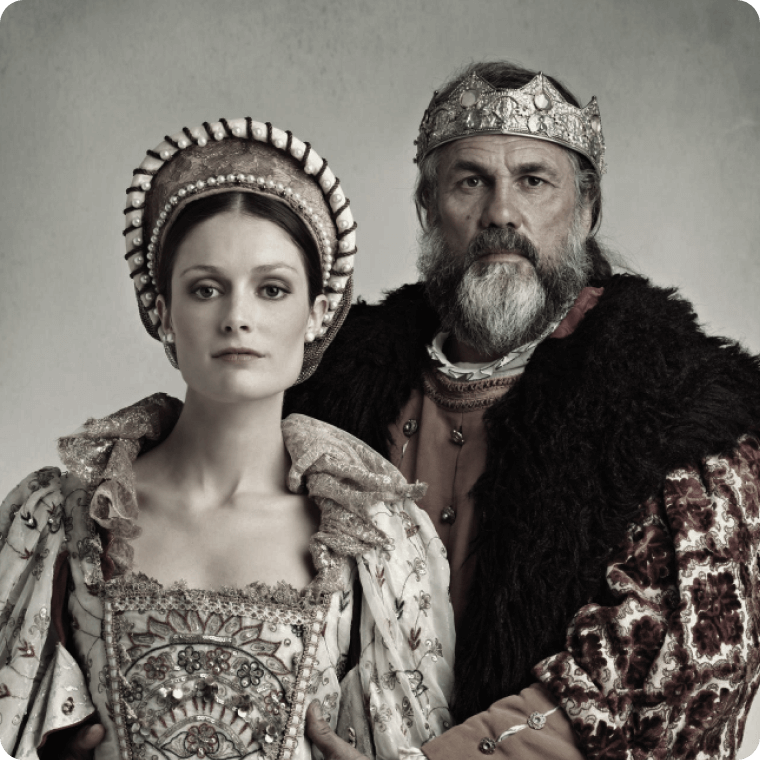
That’s why historical accuracy is key. It not only ensures the plot remains truthful but also ups the appeal of historical and bibliographical films. People want to see what life was really like during World War I or how the British Royal Family navigated in-fighting and drama in 1509. It’s this real-world escapism that makes these films so popular.
Biographical Insights
We have a tendency to place certain people on a metaphorical pedestal. Celebrities, world leaders, historical figures… all of these people seem almost “untouchable” to you and me. It’s like they don’t even exist in the real world, just in stories and TV shows.
Celebrities
World Leaders
Historical
Biographical films play an important role in humanizing these types of people.
Father of Modern Computer Sci.
– Alan Turing
Through intimate scenes and dialogue, we can get a true sense of who these characters are or were. Suddenly, Alan Turing seems like a misunderstood and flawed man rather than the revered “Father of Modern Computer Science” his legacy entails.

The Imitation Game is just one of many films that shed new light onto historical figures, painting them in ways common folk like you and me had never known before.

Robert Oppenheimer
The recent blockbuster Oppenheimer is another fine example of this. If, like me, you’d only heard of Robert Oppenheimer as the inventor of the atomic bomb before watching the film, you would have discovered that his personality was a lot more complicated than you imagined.
Entertainment vs. Education
These films carry significant cultural weight and are almost always box-office hits.
However, filmmakers must strike a balance between engaging storytelling and factual accuracy. Stories should be told as accurately as possible, but reality can get in the way.

The simple truth is that, sometimes, historical stories just aren’t as exciting as they could be. At times, filmmakers need to embellish the events in order to bring us good cinema. And sometimes, they just want to take some creative liberties with how the story is told.

Yorgos Lanthimos
Take The Favourite, directed by Yorgos Lanthimos. Its portrayal of Queen Anne and her two court favorites, Sarah Churchill and Abigail Hill, tells us a lot about the noble life of the time and the political struggles faced by the British Empire. But while Lanthimos included many historical accuracies, he also told the Hollywood Reporter, “Some of the things in the film are accurate, and a lot aren’t.”
“Some of the thing in the film are accurate, and a lot aren’t.“
It’s this balance between accuracy and dramatization that makes historical and biographical films so adored.
Key Films and Their Impact


Historical films are so interesting. You can get a solid education of past events while being taken on a gripping journey full of drama and intrigue.
All the best directors over the years have tried their hands at biographical or historical movie-making. Incidentally, two of Spielberg’s best-known films are historical ー Saving Private Ryan and Schindler’s List.

Saving Private Ryan

Schindler’s List
Here are several key historical films that will have you reading through Wikipedia for hours after you’ve finished watching.
Pivotal Historical Films
Of the many historical films made ー and there are lots ー some always find their way to the top of everyone’s lists. Real events simply make excellent inspiration for movies (side note: they also make ideal movies for veterans to enjoy).
There are films that are so culturally significant that they are the very definition of timeless. Here are three of the best historical films ever made:
1993
Schindler’s List
Directed by Steven Spielberg, Schindler’s List stars Liam Neeson as Oskar Schindler, a German Nazi who becomes sympathetic to the Jewish people, sheltering hundreds from Nazi persecution by bribing officials. The film was highly commended for its accuracy and sensitivity and won countless awards, including the Academy Award for Best Picture.


1997
Titanic
While typically categorized as a drama, Titanic (directed by James Cameron) tells a largely fictionalized account of a lovestruck couple on board the HMS Titanic and the modern-day search for a diamond necklace that sunk with the ship. It was a pivotal film that transported the event back into the mainstream.
2012
Lincoln
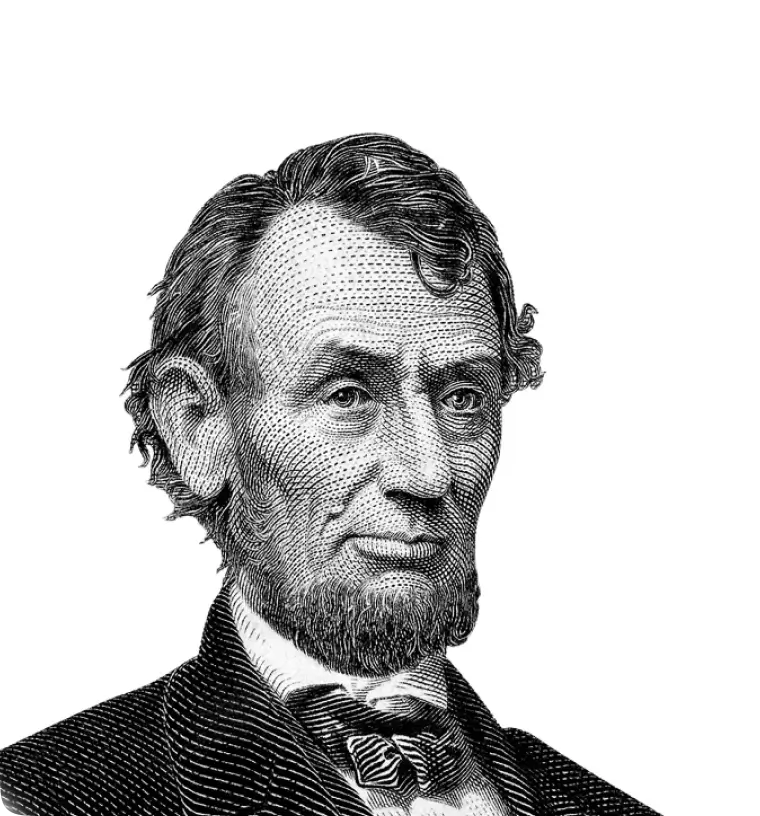
Another Spielberg film, Lincoln follows the eponymous Abraham Lincoln in his attempts to abolish slavery in the US in the aftermath of the Civil War. Daniel Day-Lewis won Best Actor for his portrayal of the president, and Spielberg added yet another significant biographical work to his filmography.
Honorable Mentions
1963
The Great Escape
2013
12 Years a Slave
2019
1917
Biographical Masterpieces
There are many biographical films depicting real-life characters (some well-known, others less famous) that are true masterpieces.
Some of these are so powerful that they completely alter your perception of historical figures. After watching one, you’ll learn never to make rash judgments about a person again – every story has many sides.
With that, here are three of the best biographical films of all time:

Winning Seven Awards
1962
Lawrence of Arabia
Based on his own memoirs, this film recounts the experiences of T. E. Lawrence, a British colonel known for his involvement in the Arab Revolt and uprising against the Ottoman Empire. This film is widely regarded as a biographical masterpiece, winning seven awards at the 35th Academy Awards.
Best Picture at the 55th Academy Awards.
1982
Gandhi
Starring Ben Kingsley in the title role, Gandhi depicts the life of the historical figure from 1893 to 1948. The film was heavily praised for its historical accuracy, both of Gandhi’s life and of Indian life under British colonization, winning Best Picture at the 55th Academy Awards.
Winning Best Actor
2014
The Theory of Everything
This film chronicles the life of esteemed physicist Stephen Hawking (played by Eddie Redmayne), adapted from the memoirs of Jane Hawking (Felicity Jones), his wife of 30 years before their separation in 1995. The film was nominated for five Academy Awards, winning Best Actor (Redmayne).

Honorable Mentions
1980
The Elephant Man
1984
Amadeus
2008
Milk
Comparative Analysis
of Holocaust Films
The Holocaust is a tricky topic for filmmakers.
Generally, directors and producers shy away from this topic if they have no direct connection to the event. Better to let someone with the right culture and understanding tell the story.
Fortunately, plenty of these movies exist. I say this because it’s important that these films get made and that we remember the horrific events so we never repeat them.

This disturbing stain on human history has been told numerous times on film, and yet directors and scriptwriters continue to find new ways to shed light on the tragic events.
Here, I’ll discuss three key Holocaust films and why each one is incredibly significant in its own way:
1982
Sophie’s Choice
Set in Brooklyn just after the end of the Second World War, Sophie’s Choice depicts the life of Zofia “Sophie” Zawistowska, a Polish immigrant who has recently moved to the US. The film recounts the events of Sophie’s life through flashbacks to Auschwitz and offers a fictional yet very real depiction of post-war trauma as a Holocaust survivor tormented by the horrors of the war.

2008

The Boy in the Striped Pyjamas
The second film on our list, The Boy in the Striped Pyjamas is a fictional story set in Nazi-occupied Poland. It follows a young German boy, the son of a high-ranking Nazi, who works at the extermination camp near their house and who befriends a Jewish boy inside the camp. Although fictional and somewhat inaccurate in its depiction of the Holocaust, the film still offers a powerful and moving reminder of the issues and events during this period.
2023
The Zone of Interest
This modern Holocaust film takes a different approach entirely. It depicts the life of the Höss family, high-ranking Nazis who live in the immediate surroundings of Auschwitz. The film portrays these people as mundanely human, demystifying the evils of the Holocaust and instead showing that these people are closer to current real-world figures than we think.
Challenges in Filmmaking


For all their positives and praise, historical films can and do receive their fair share of backlash. When you’re in the public eye, as filmmakers are, everything you do will be scrutinized.
Cultural sensitivity
Controversial characters
Technological
Budget constraints
For one, there’s the debate as to whether filmmakers are entertainers or educators. Then, there are issues surrounding cultural sensitivity in the portrayal of controversial characters and events. Plus, technological and budget constraints can limit the story you want to tell.
All these factors make producing a historical or biographical film a challenge. Some also argue that since you can’t satisfy everyone,
should you even try?
Let’s explore in more detail some of the major challenges filmmakers face when creating historical and biographical films.
Accuracy vs. Artistic License
The age-old debate: is it a filmmaker’s job to entertain or to educate? Or both?
2005
Kingdom of Heaven
Director Ridley Scott would argue the former, especially in regard to his 2005 epic Kingdom of Heaven, which depicts the fall of Jerusalem to Saladin in 1187.
It grossed over $218 million worldwide. Successful, right? Not in the eyes of historians or critics.
In fact, the film was heavily criticized for its historical inaccuracies, from the characters portrayed to the politics involved. But its huge success at the box office means the debate of accuracy vs. artistic license remains unsolved.

There is a long list of historical films with historical inaccuracies, suggesting that most filmmakers enjoy a little creative license in their work. Telling real-life stories can be fun, but what do you do when the drama dies out? Add in a little of your own, of course.
Braveheart
Take Braveheart, for instance. The title character, William Wallace, was never actually given the name “Braveheart” ー instead, it was Robert the Bruce who earned this moniker. Plus, Robert never betrayed William in real life, but where’s the drama in that?
Cultural Sensitivity
Filmmakers are faced with more than just the challenge of presenting facts; they must do it in a way that navigates the controversial and often outdated cultural nuances of the time.
Attitudes, many of which people would simply not tolerate today, change throughout history. As a filmmaker, it can be difficult to depict factual events without integrating stereotypes and controversies of the time. As a result, they must navigate this cautiously and with significant cultural sensitivity.
Two films that handle cultural representation well are
1987
Bernardo Bertolucci’s
The Last Emperor
2013
Steve McQueen’s 12 Years
a Slave

Bernardo Bertolucci’s The Last Emperor
The Life of Puyi
The first is an epic biographical drama about the life of Puyi, the final Emperor of China. Bertolucci successfully portrayed the horrific events that occurred in China and Japan during the first half of the 20th century, representing both cultures accurately and inoffensively.
Steve McQueen’s 12 Years a Slave
The film is 88.1% historically accurate
Similarly, 12 Years a Slave dealt with some heavy issues regarding slavery and racism in the 19th-century United States. But through McQueen’s extensive research and the use of consultants on set, the film garnered huge praise for its hugely accurate representation of the time period. According to the blog Information is Beautiful, the film is 88.1% accurate.
Technological and Budget Constraints
I think if you were to ask a filmmaker what their biggest nightmares are, they would say either failing technology or a lack of budget to express their creative vision.

Budgetary

Technological
For directors and producers of historical films, budgetary and technological restraints can have a huge impact on the story they can tell. Can’t afford to pay for too many extras? Then forget those large battle scenes.
But you don’t necessarily need a big budget to ensure historical accuracy.
The king’s Speech
The King’s Speech, directed by David Seidler, only had a budget of $15 million (that sounds like a lot, but is actually relatively small in the modern age of filmmaking).
It earned over $427.4 million at the box office worldwide and was widely praised for its script, cinematography, casting, and historical accuracy

Must-See Films Across Different Periods


So, What are the must-watch films in the historical and biographical genre?
Every film we’ve mentioned so far is well worth watching, but we hope that you’ve at least seen a few of them already!
To avoid repeating ourselves in this next section, we’ll list some different films that tell the stories of various time periods and events. Fortunately, there’s no shortage of masterpieces in this genre, so there are plenty of movies to add to your watchlist!
We’ll divide the films into different eras, starting with ancient history to biographical films covering more contemporary figures.
Ancient to Medieval History

When was the last time you thought about the Roman Empire?
If you’re a fan of history films, chances are the answer is pretty recently!
I mean, who doesn’t love a film about ancient battles and medieval civilizations? There are tons of films we could pick for this time period, but here are three of our favorites:
1999
The Messenger: The Story of Joan of Arc
As you may have guessed from the title, this film tells the story of French heroine and martyr Joan of Arc. Set during the Hundred Years’ War, The Messenger portrays a largely accurate account of her life, receiving mixed reviews from critics.
2000
Gladiator
Are you not entertained? Another Ridley Scott film on our list, this film stars Russell Crowe in the role of Roman general Maximus Decimus Meridius, who is betrayed by the Emperor’s son Commodus (played by Joaquin Phoenix). Forced into slavery, he becomes a gladiator and seeks his revenge.
2006
300
This film depicts a fictionalized version of the Battle of Thermopylae in the time of Ancient Greece. It follows King Leonidas (played by Gerard Butler) as he leads 300 Spartans into war against the 300,000-strong Persian army.
Renaissance to Early
Modern History
We move onwards in time to the Renaissance period, which saw many notable figures make their mark on human history.
If you’re a fan of the romance and riches of this time, here are two classic films we’re sure you’ll enjoy:


1998
Shakespeare in Love
This film was so good that it received a huge seven Academy Awards, including Best Picture and Best Actress (for Gwyneth Paltrow). The rom-com imagines a fictional affair between William Shakespeare (played by Joseph Fiennes) and Viola de Lesseps (Paltrow).
1998
Elizabeth
Strangely, Joseph Fiennes plays a leading role in this film, too! Elizabeth tells the story of the early years of Queen Elizabeth I’s reign over England. It stars Cate Blanchett in the title role, for which she won a Golden Globe for Best Actress.
Modern History

The 20th century was undoubtedly a war-ravaged time
Moving onto Modern History, now, this is a period dominated by war and disaster films. The 20th century was undoubtedly a war-ravaged time, and its proximity to us in the present day makes these stories all the more compelling.
Alongside many of the films we’ve already listed in this article, here are two must-watch films that take place in the last century:
Here are our two favorite contemporary biographies:
2014
Selma
Selma depicts the story of the 1965 Selma to Montgomery Marches on black voter rights in the US. Although the film generated some controversies about the representation of certain groups and figures, Selma remains a favorite of many film lovers and received positive reviews.
2017
Dunkirk
Directed by Christopher Nolan, Dunkirk is a historical war film about the evacuation of Dunkirk during the Second World War. Upon its release, it became the highest-grossing film about World War II of all time. With a focus on cinematography and suspense over dialogue, the film stars an ensemble cast, including Cillian Murphy, Tom Hardy, Barry Keoghan, and Harry Styles.
Contemporary Biographies
The 21st century has had many history-defining moments, but it feels a little strange to call these films “historical”. Instead, many prefer to use the term “biographical”, particularly when the films are about a specific person or group of individuals.
Contemporary figures are of great interest to film lovers, and there have been several high-profile biographical films about recent (and still living) public figures.
Here are our two favorite contemporary biographies:
2010
The Social Network
Jesse Eisenberg stars as Mark Zuckerberg, the founder of Facebook, in this dramatic retelling of how Facebook was founded. Eisenberg is joined by Andrew Garfield, Justin Timberlake, and Armie Hammer in a star-studded cast.

2015
Steve Jobs
Directed by Danny Boyle and starring Michael Fassbender in the titular role, Steve Jobs focuses on a 14-year period of the life of Apple’s founder. The screenplay, acting, casting, and score were all highly praised, but it was also criticized for various historical inaccuracies.
The Future of Historical and Biographical Films

It feels odd to talk about the future when it comes to historical films that are rooted in the past. So many stories have already happened that are just waiting to be depicted on the big screen.
Who knows which events will have their moments in the spotlight?
Who knows what is yet to happen that may be as significant as any battle in history?
What we can say for certain is that historical and biographical films will forever be loved by filmmakers and movie-goers alike. Here are three emerging trends that show why this genre will remain at the forefront of cinema over the coming years:

1. History Will Always Be Popular:
There have been no signs of slowing down with historical films. Even though the events happened years ago, their stories are just as influential today as they were back then. Just look at all the historical and biographical films that have been released in recent years: 1917, Elvis, The Zone of Interest, Belfast… Oppenheimer even won Best Picture at the 2023 Oscars!
2. Documentaries are on the Rise:
Documentaries and docuseries are becoming increasingly popular. These form their own category but represent a very similar genre to historical and biographical films. While historical films often take artistic license when telling stories, documentaries are more focused on accuracy and truth. If you haven’t already, be sure to check out the documentary films 13th and Won’t You Be My Neighbor?
3. More Historical Films and Biopics Than Ever:
With the boom in streaming service popularity, there has never been a greater demand for films than now. In the coming years, expect a lot more variety when it comes to choosing which historical or biographical film to watch.

Upcoming Releases
What have we got to look forward to? What historical and biographical films are planned for the near future? Check out these upcoming releases and get prepared for more great biopics in 2025 and beyond:

2024
A Better Man
Premiering in late 2024 but due out in cinemas in early 2025, Better Man is a biopic about the life of Robbie Williams, solo singer and former member of the boyband Take That. Williams stars as himself, with Jonno Davies as his younger version.
2025
Michael
This film will surely be on everyone’s lips next year. Michael recounts the life of pop icon Michael Jackson, who is played by his own nephew, Jaafar Jackson. Viewers can look forward to an in-depth view of Jackson’s life, from his time in the Jackson 5 to his final years.
Conclusion


It’s clear that historical and biographical films will always have a place in the world of cinema.
Through blockbuster thrillers like Gladiator and Oppenheimer and emotional biopics like The Theory of Everything and Gandhi, the importance of non-fictional storytelling is not lost on filmmakers.




As long as these films keep being made, human history will never be forgotten
Yes, there will always be a debate around historical accuracy vs. artistic license. But why can’t you have both? What’s wrong with a little invented drama if it makes the story even more exciting? As long as you take it with a pinch of salt, there’s no harm in a bit of dramatization.
Soooo cooooo zzzzyy!
So, sink into your cozy Octane pod or sprawl out over a VIP cinema seat, and enjoy an endless catalog of historical narratives


If you’re struggling to find a film to watch, we encourage you to check out the history and biographical genres on your streaming service of choice ー you’ll be surprised by how many quality films you’ll find!
What are some of your favorite historical and biographical films?
Have we missed any in this article that you feel are worth mentioning?
Let us know!