
Unscripted
Movie
Madness

Movie theaters have always been special — a place to escape, connect, and experience stories on a larger-than-life scale. But in a world increasingly shaped by online behavior and shorter attention spans, what we expect from a night at the movies is changing. To better understand how people are experiencing movie theaters today, we surveyed 1,000 U.S. citizens. What we found was a world of wild encounters, nostalgic milestones, and a serious rethinking of moviegoing norms.
Key Findings
62%
62% of Americans have gotten intimate at the movies — including 1 in 25 who’ve had sex in a theater.
41%
41% have yelled at someone during a movie — mostly over phones, chatter, or couples getting handsy.
9%
1 in 5 have filmed other moviegoers to make fun of them — 9% posted it online.
31%
31% say they found trash all over their seat or floor at the movies.
1 IN 10
1 in 10 have had food or drinks thrown at them during a movie.
1 IN 10
have seen someone doing drugs at the movies.
34%
Horror movies draw the most obnoxious crowds — 34% say the worst theater behavior they’ve witnessed happened during a scary film.
From Drugs to PDA
The Wild Things That Happen After
the Lights Dim
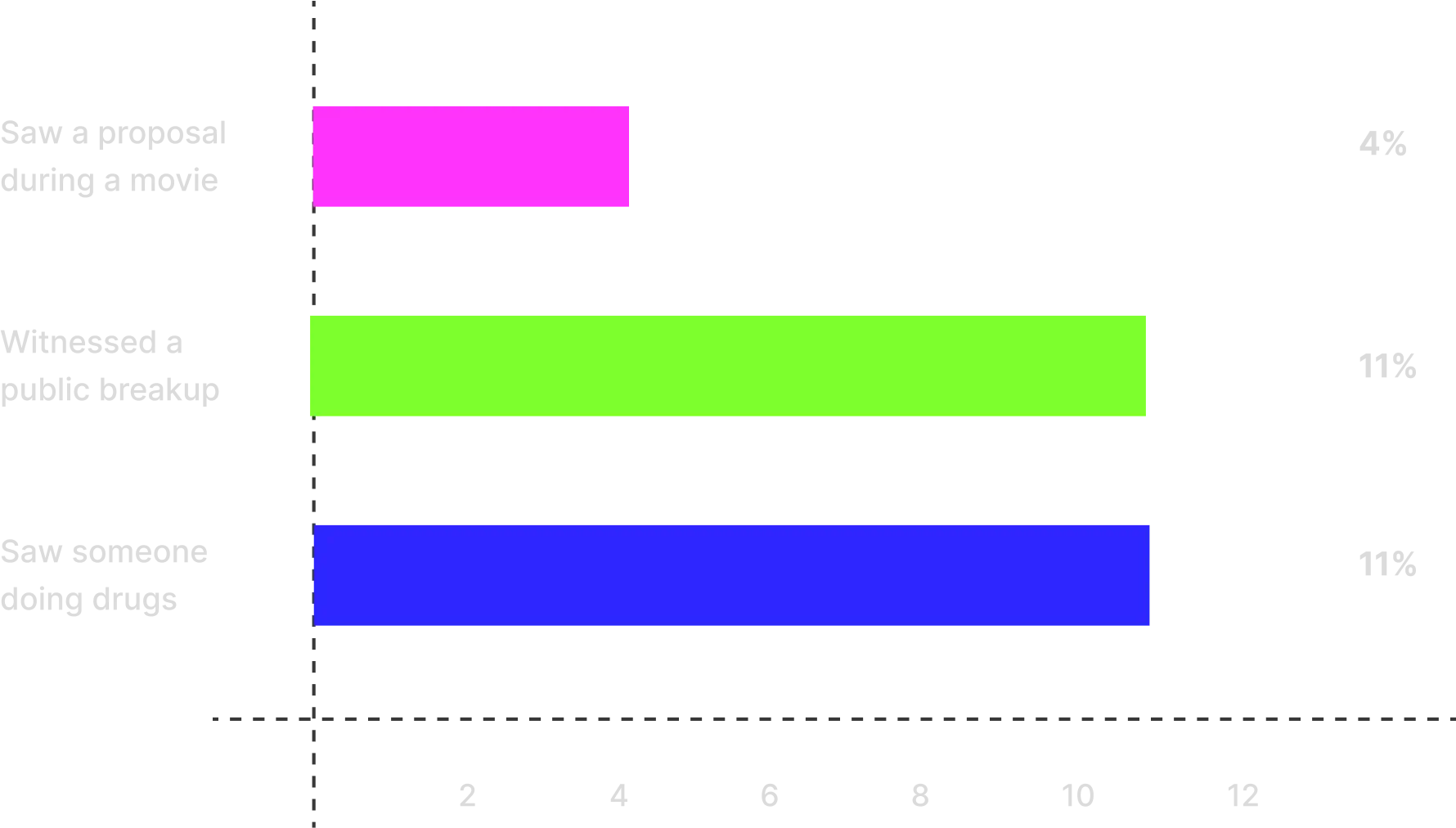
The lights may dim when a movie starts, but drama often brightens the theater. Here are the wildest off-screen moments Americans have seen at the movies:
Then there are the truly jaw-dropping moments: 11% saw someone doing drugs, another 11% saw a public breakup, and 4% even saw a proposal during a movie. Clearly, the movie theater has become more than just a space to watch films — it’s a stage for human drama in all its wild forms.
Despite the antics, theaters still hold sentimental value for many. For countless people, some of life’s most memorable milestones have taken place in the flickering glow of a theater screen. For example:
Jaw-Dropping Moments Witnessed in Movie Theaters
Movie theaters aren’t just entertainment venues — they’re personal landmarks.
Horror Reigns as the Ultimate Chaos Trigger
More than a third of Americans say horror movies attract the most disruptive audiences. Maybe it’s the adrenaline, maybe it’s the jump scares, or maybe it’s just the thrill of being in a dark room with strangers.
Either way, horror films seem to unlock something primal in viewers. However, older generations seem to have more misgivings about the effects of horror, with 46% of baby boomers saying that that genre has the worst effects on behavior, and only 27% of Gen Z and 30% of millennials agreeing.
Horror isn’t the only genre that may inspire disruptive behaviors. Americans also identify the following as potentially problematic:
Horror Films Unlock Something Primal in Viewers

Documentary/arthouse films (1%) were considered to be the least likely to trigger bad audience behavior — though, to be fair, who’s starting a popcorn fight during a quiet French indie drama?
Etiquette in Freefall: Half Have Sparked Disruption
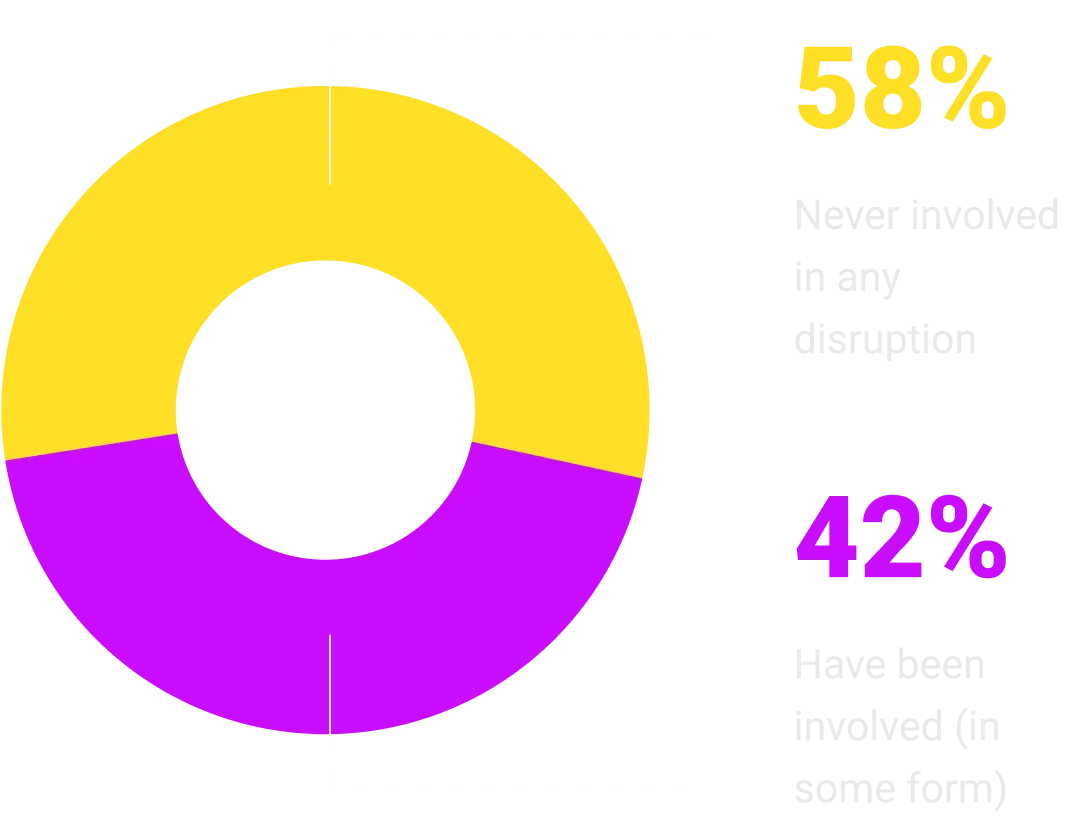
Have You Ever Caused or Been Part of a Disruption at the Movies?
Over half of Americans (58%) claim they’ve never been involved in any kind of disruption in the movie theater, while the rest paint a much rowdier picture:
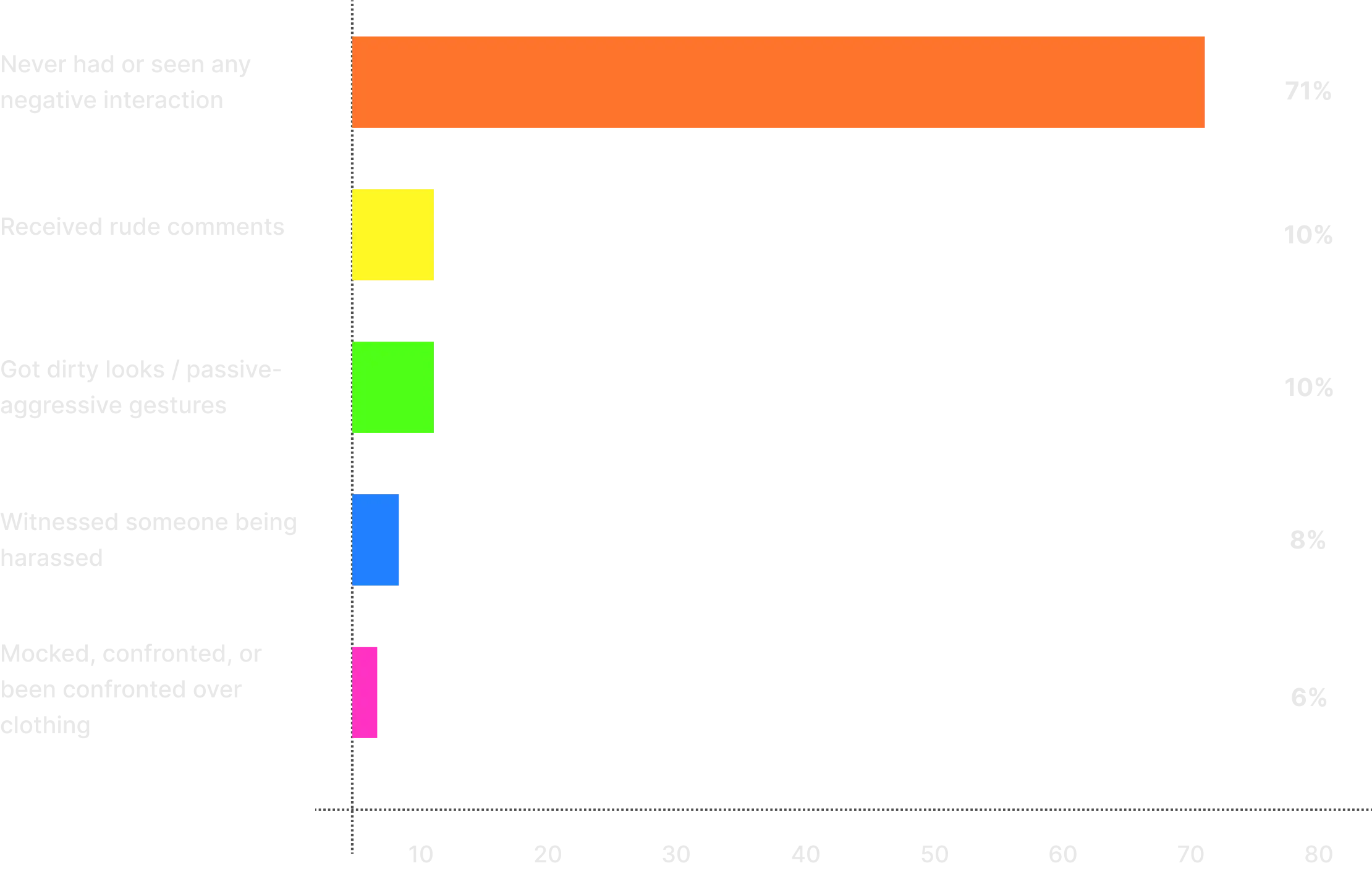
And even politics has found its way into the popcorn line. Political clothing sparked conflict for a surprising number of Americans. While 71% say they’ve never had or seen a negative interaction over political attire at a movie theater, the rest experienced various forms of friction. 10% received rude comments, another 10% dished out dirty looks or passive-aggressive gestures. 8% witnessed someone being harassed, and 6% admitted to mocking someone, being mocked, confronting someone, or being confronted over political clothing.
It seems even your T-shirt can set the tone for the whole screening.
Political Clothing Sparks Conflict in Theaters
Half of Gen Z Have Buzzed, Boozy, and Rolling Movie Nights
Another sign of changing theater culture? A more relaxed — or perhaps reckless — attitude toward sobriety. 39% of Americans say they’ve arrived at the theater drunk or high, 9% admit they’ve wanted to, while 53% said they never would.
Attitudes Toward Sobriety at the Movies
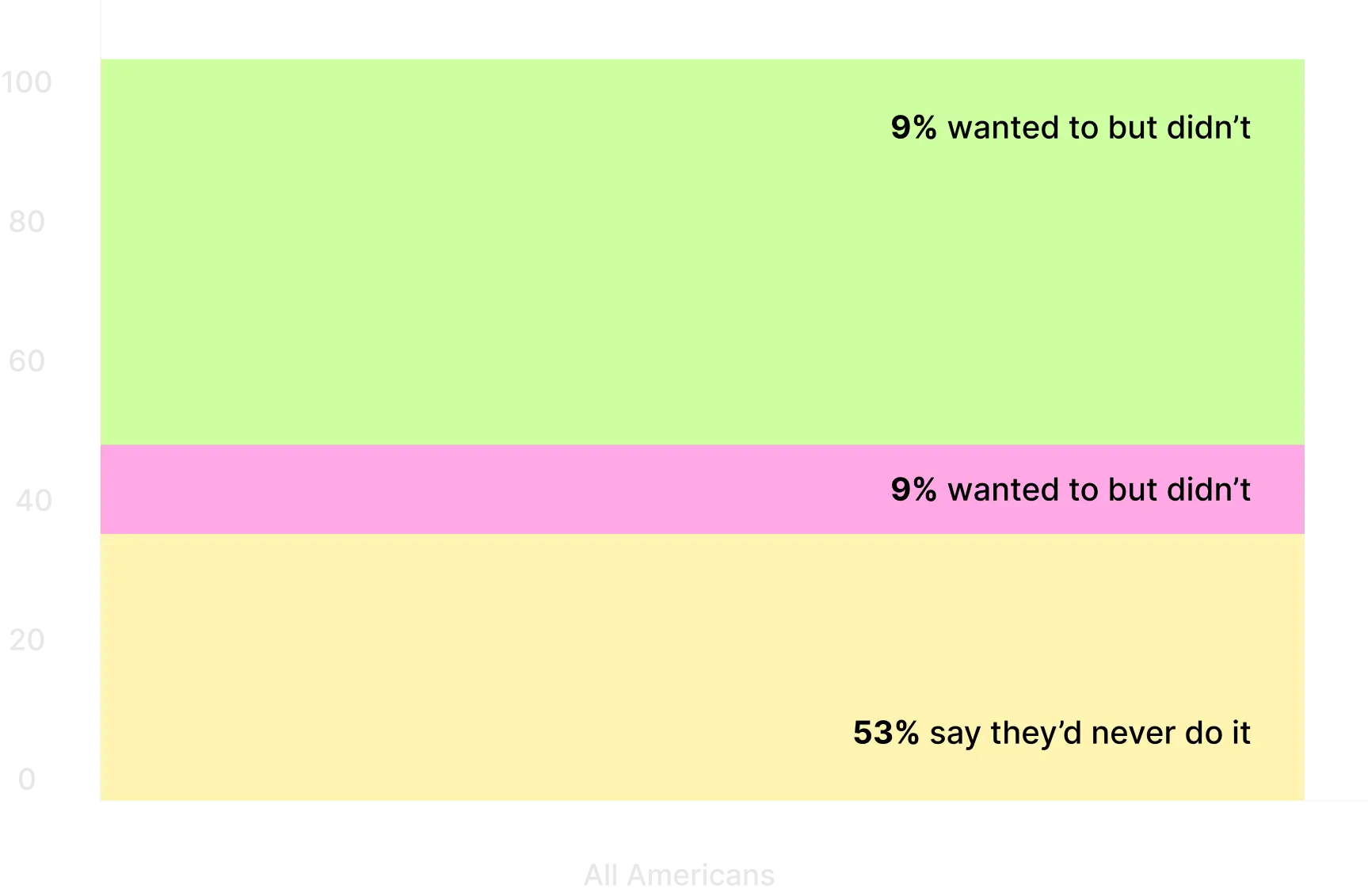
But the youth are blazing their own trail. A full 50% of Gen Z and 47% of millennials say they have shown up under the influence compared to just 17% of baby boomers.
21%
have filmed someone to mock them (in any way)
9%
posted it online
7%
shared in group chats
18%
wanted to but didn’t
Mocking Patrons for Clout
Over 1 in 5 Americans (21%) have filmed another moviegoer to mock them online, though 18% admit they have wanted to. But for a growing number of people, the temptation proves too strong: 9% say they’ve filmed someone and posted it on social media, and 7% shared such videos in a group chat. This behavior is increasingly common among younger generations, with 36% of Gen Z admitting to filming someone at the theater compared to only 1% of baby boomers.
Whether it’s for laughs or likes, this new form of digital theater criticism adds a layer of discomfort and could explain why some patrons are increasingly on edge.

Cinema Sins Exposed
Some patrons are getting more creative — and more brazen — with their misbehavior, especially when it comes to what they sip and snack on:
76%
of Americans have never been involved in snack-throwing.
13%
witnessed it happening.
8%
were actual targets.
5%
threw something back.
5%
started the snack drama themselves.
Speaking of food and drink, while over three-quarters of Americans (76%) say they’ve never seen or been involved in a food or drink-throwing incident, the rest have spicier stories. 13% had witnessed flying snacks, 8% had been the target, 5% threw something back, and another 5% admitted to starting the snack-throwing drama themselves. Think of it as dodgeball with popcorn.
Walkouts, Worries, & Post-COVID Anxieties
Sometimes the theater experience becomes too much to handle. When asked whether movie theater behavior has changed since COVID, Americans are divided:
Pandemic worries aren’t the only thing that can negatively affect the theater experience. So why are people walking out of movies mid-showing? While nearly half (47%) have never walked out, the rest left for reasons ranging from minor to major:
17%
left due to nonstop talking.
14%
encountered technical glitches.
11%
couldn’t take all the phone usage.
11%
cited constant seat-kicking.
10%
blamed unpleasant odors.
9%
were dragged out by a bored companion.
8%
had bathroom emergencies.
One especially sobering stat: 54% of Americans say they fear a mass shooting at a movie theater — a fear that jumps to 64% among Gen Z.
For some, the anxiety around safety now overshadows the joy of the moviegoing experience, while others still feel relatively comfortable at the movies despite the risk.
Accidental Mishaps
Not all movie theater madness is malicious. Sometimes, it’s just… embarrassing. When asked how often they fall asleep during movies:
44%
of Americans say never.
34%
say rarely.
15%
say occasionally.
5%
say frequently.
2%
say basically every time.
Then there are the bladder blunders. While the vast majority of people (93%) haven’t had any issues, 1 in 13 admit to peeing their pants at the movies.
Embarrassing moments abound: 13% say they walked into the wrong theater and sat down, 10% admit to having snored mid-movie, 7% tripped or fell in front of others, and 6% laughed or cried at totally inappropriate moments. Nobody leaves a theater entirely unscathed.
Missing the Movie to Avoid an Accident
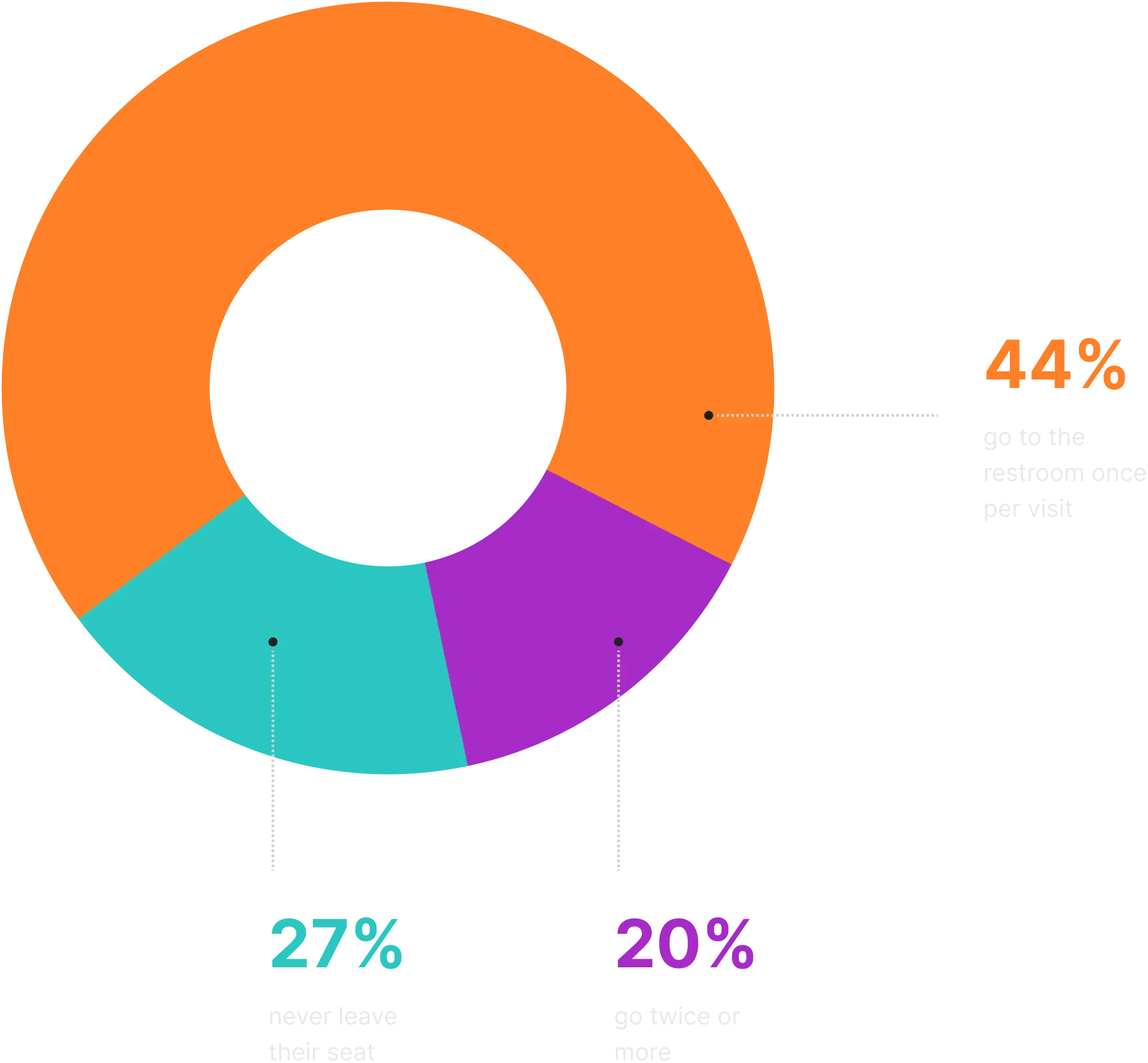
A full 20% of Americans leave their seats to use the restroom at least twice per theater visit, 44% typically go once, and 27% manage to make it through the whole movie without leaving. That’s commitment — or at least good timing with drinks.
Love and Money in the Projector Light
Despite all the antics, movie theaters are still a backdrop for romance. 62% of Americans have gotten physically intimate in some way during a movie. And yes — 4% said they’ve “gone all the way.”
Still, 30% say that physical intimacy at the theater is something they’d never engage in, with women more likely than men to take that stance.
Date-Night Sticker Shock vs. “The Vibes”

But these steamy encounters might start dwindling as almost half of Americans (48%) say movie dates are just too expensive. Still, 1 in 4 go anyway — sometimes for the nostalgia, sometimes for the vibes. For others, staying home with theater-style seating and surround sound offers all the magic, minus the price tag.
Beating the Heat for the Price of a Ticket
Dates aren’t the only thing that’s expensive, though. With summer temperatures and utility costs soaring, almost 1 in 3 Americans say they’re planning to go to the movies this summer as a way to escape the heat and save on air conditioning.
Call it budget-friendly climate control with a side of entertainment.
Sticky Floors, Chatty Guests, and Petty Payback
Of course, not everything about the movie experience is magical. When asked about the grossest things they’d encountered at the movies, 38% of Americans say they’ve never had a grimy experience — but the rest weren’t so lucky. Nauseating movie encounters included the following:
Annoying behaviors are also rampant. The top complaints? Talking during the movie (40%), using phones during the show (19%), and kicking seats (10%).
4 in 5 Sneak Snacks
81% of Americans say they’ve snuck food into a theater,
but it’s not always consequence-free. While 35% say doing so has never caused a conflict, some experienced awkward encounters with other patrons: 7% admit the packaging was loud and they were shushed, 5% say it smelled really strong and someone complained, 3% confess they got caught sneaking in alcohol and got called out for it.
Half Stew Silently, the Rest Kick Back (Literally)
So what happens when someone ruins your theater experience? Most people let it go — 46% say they’ve never retaliated, and 18% admit to just stewing in silence.
But others take a more proactive approach:
It’s also interesting to note that the younger generation reports engaging in more petty behavior than the older, with 38% of Gen Z saying that they don’t seek out petty revenge compared to 54% of baby boomers.
In the age of streaming, luxury seating, and chaotic crowd energy, the movie theater has become much more than a place to watch films — it’s a microcosm of modern life, full of romance, rebellion, and ridiculous surprises. Whether you’re there for the film, the A/C, or the pure unpredictability of it all, one thing’s for sure: there’s no such thing as a quiet night at the movies anymore.
Methodology

The findings presented in this report are based on a nationwide survey conducted among 1,000 U.S. citizens. Respondents were asked a series of questions regarding their recent movie theater experiences, behaviors, perceptions, and attitudes toward modern cinema culture. The data pool was designed to reflect a diverse cross-section of demographics, including age, gender, and region, to provide a comprehensive look at how Americans experience moviegoing today. The results have been aggregated and analyzed to identify broader trends and behavioral shifts impacting theaters across the country.
Fair Use Policy
We welcome the sharing of insights from this study for noncommercial purposes, including academic research, blog content, media coverage, and educational use. If you choose to reference or cite the data presented in this report, we ask that you do so with proper attribution and include a clear link back to this article as the original source. Linking not only supports transparency and credibility but also allows readers to explore the findings in full context. For media inquiries or commercial use, please contact us directly for permission.
Do you think there is a current trend in space-related film and TV?
Yes, In recent years, major franchises such as Star Wars and Marvel have popularized a genre of science fiction that explores the possibilities of space exploration and encounters with aliens. There are also other films that focus on more realistic storylines set within the vastness of space, like Gravity or The Martian. Space-related content has become increasingly prevalent across all forms of media, including TV shows like The Orville or movies like Interstellar. Thus, it’s safe to say that space-related content is here to stay for some time.
How has the portrayal of space changed over the years?
The representation of outer space in movies, television shows, books, and other forms of media has changed significantly over the years. Early portrayals of space often depicted it as a dry and barren wasteland filled with dangers like asteroid fields or hostile aliens. However, more recent depictions of space have embraced its beauty by depicting nebulae and galaxies in vivid detail. There has also been an increased focus on the scientific aspects such as exploration missions and discoveries made by mankind. The ongoing advances in technology have allowed for much more realistic depictions of space which further enhances people’s appreciation for it.
Are there any upcoming space-related film or TV projects that audiences are excited about?
Yes, there are several upcoming space-related film and TV projects that audiences are excited about. Some of the most highly anticipated include ‘The Tesla Project’, an Apple TV+ series from Ron Howard and Brian Grazer; the Disney + movie ‘Stargirl’; and Christopher Nolan’s ‘Interstellar’. Other notable upcoming projects include HBO Max’s ‘Away’ starring Hilary Swank and Netflix’s sci-fi drama, ‘Space Force’. All these are sure to excite space enthusiasts around the globe!
What are some of the most iconic space-related film and TV moments?
- The “In Space, No One Can Hear You Scream“ tagline from the 1979 film Alien.
- The opening sequence from 2001: A Space Odyssey.
- The Enterprise’s first warp-speed jump from Star Trek.
- The Rebel Alliance’s attack on the Death Star from Star Wars.
- The discovery of the monolith from 2001: A Space Odyssey.
- Hal 9000’s “I’m sorry Dave” line from 2001: A Space Odyssey.
- The “Space, the final frontier” opening of Star Trek.
- The Millennium Falcon’s jump to light speed from Star Wars.
- The iconic Wilhelm scream from Star Wars.
- The “Open the Pod Bay Doors” scene from 2001: A Space Odyssey
How do actors prepare for their roles when filming in space?
As of now, there hasn’t been a mainstream film or TV series filmed in space, so there is no definitive answer to how actors would prepare for their roles in such a scenario. However, if and when it happens, the following could be some possible ways actors might prepare for their roles:
- Training in space-like environments: Actors could undergo extensive training in environments that simulate the conditions of space. This could include training in zero-gravity, using spacesuits and operating spacecraft, and learning how to deal with emergencies in a space-like setting.
- Researching the science behind space travel: Actors could spend time learning about the science behind space travel, the physics of spaceflight, and the effects of space on the human body. They could also read up on the history of space exploration and familiarize themselves with the current state of space technology.
- Talking to astronauts: Actors could talk to astronauts who have spent time in space to get a firsthand account of what it’s like to live and work in space. They could also learn about the emotional and psychological effects of long-duration spaceflight.
- Consulting with space experts: Actors could consult with space experts such as engineers, astrophysicists, and space policy experts to gain a better understanding of the challenges and opportunities of space exploration.
- Working with a space consultant: If the film or TV series is working with a space consultant, the actors could work closely with them to ensure that their performances are as accurate and authentic as possible.
- Overall, preparing for a role in a space-themed production would require a lot of research, physical training, and consultation with experts. Actors would need to work hard to make their performances as authentic and convincing as possible.
Do film and TV producers consult with astronauts or other experts to ensure accuracy?
Yes, film and TV producers do consult with astronauts and other experts to ensure accuracy in space-themed productions. They often work with space consultants, who are experts in the field of space exploration, to ensure that the details of the production are as accurate and authentic as possible.
For example, in the movie “Apollo 13,” director Ron Howard consulted with Apollo 13 astronaut Jim Lovell and his wife Marilyn, as well as with other NASA officials, to ensure that the film accurately portrayed the events of the real-life mission. Similarly, for the movie “The Martian,” director Ridley Scott worked closely with NASA scientists to ensure that the science and technology depicted in the film were as accurate as possible.
In addition to consulting with experts, producers of space-themed productions often conduct extensive research and may even send members of the production team to NASA facilities or other space-related locations to gain a better understanding of the subject matter.
Overall, accuracy is an important consideration for producers of space-themed productions, and they take great care to ensure that their depictions of space exploration are as true to life as possible.
Are there any challenges associated with filming space movies or TV shows?
Yes, there are many challenges associated with filming space movies or TV shows. This includes recreating the low-gravity environment of space in a studio setting and dealing with the extreme temperatures present in outer space. Another challenge is creating intricate sets that accurately depict both large and small spacecraft, as well as planets and galaxies. There are also special effects to consider when replicating cosmic phenomena like meteors or other astronomical events. The process of writing a believable plot while still keeping true to scientific facts can be quite challenging as well.
How does the use of CGI and other special effects affect the way space is portrayed?
The use of CGI and special effects has allowed filmmakers to accurately portray space on the big screen. CGI can generate incredibly realistic images of galaxies, stars, planets, asteroids, and other cosmic bodies that are far beyond what traditional special effects can create. It has also allowed for more accurate depictions of phenomena like black holes, wormholes, and nebula clouds. On top of this, it gives filmmakers the capability to create a highly immersive experience for viewers by taking them into far-off worlds or showing them powerful cosmic events in extreme detail.
Do adults and children react differently to on-screen portrayals of space?
While children tend to be more open-minded and excited about the possibilities of space exploration, adults may be more likely to take a measured approach based on past experiences or established beliefs. On-screen portrayals often emphasize the awe and mystery of space, which can encourage viewers to broaden their perspective and think differently about it. This can lead to increased support for sciences such as astronomy, astrophysics, and related fields. Ultimately, when done correctly, films and TV shows that depict space help foster scientific curiosity while inspiring audiences to learn more about our universe.
How does the portrayal of space in film and TV influence the public's perception of it?
The portrayal of space in film and TV has had a huge influence on the public’s perception of it. Movies like Star Wars, The Martian, and Gravity have made space exploration more accessible to the masses and demonstrate its potential for awe-inspiring adventure. Through these stories, people have come to recognize that space can be used for scientific discovery, technological advancement, and even entertainment. These stories also bring attention to topics such as climate change, international cooperation, extraterrestrial life forms, and other related themes which are often overlooked by those not directly involved in space exploration. As a result of this portrayal in film and TV media, the public is becoming increasingly aware of what goes on beyond our planet’s atmosphere.